1 October 2026 · 7 min read
The CFO-Grade Playbook to Prevent Agentic COGS Shock
Renegotiate contracts, redesign workflows, and meter agent usage before “AI add-ons” become an uncapped margin leak.
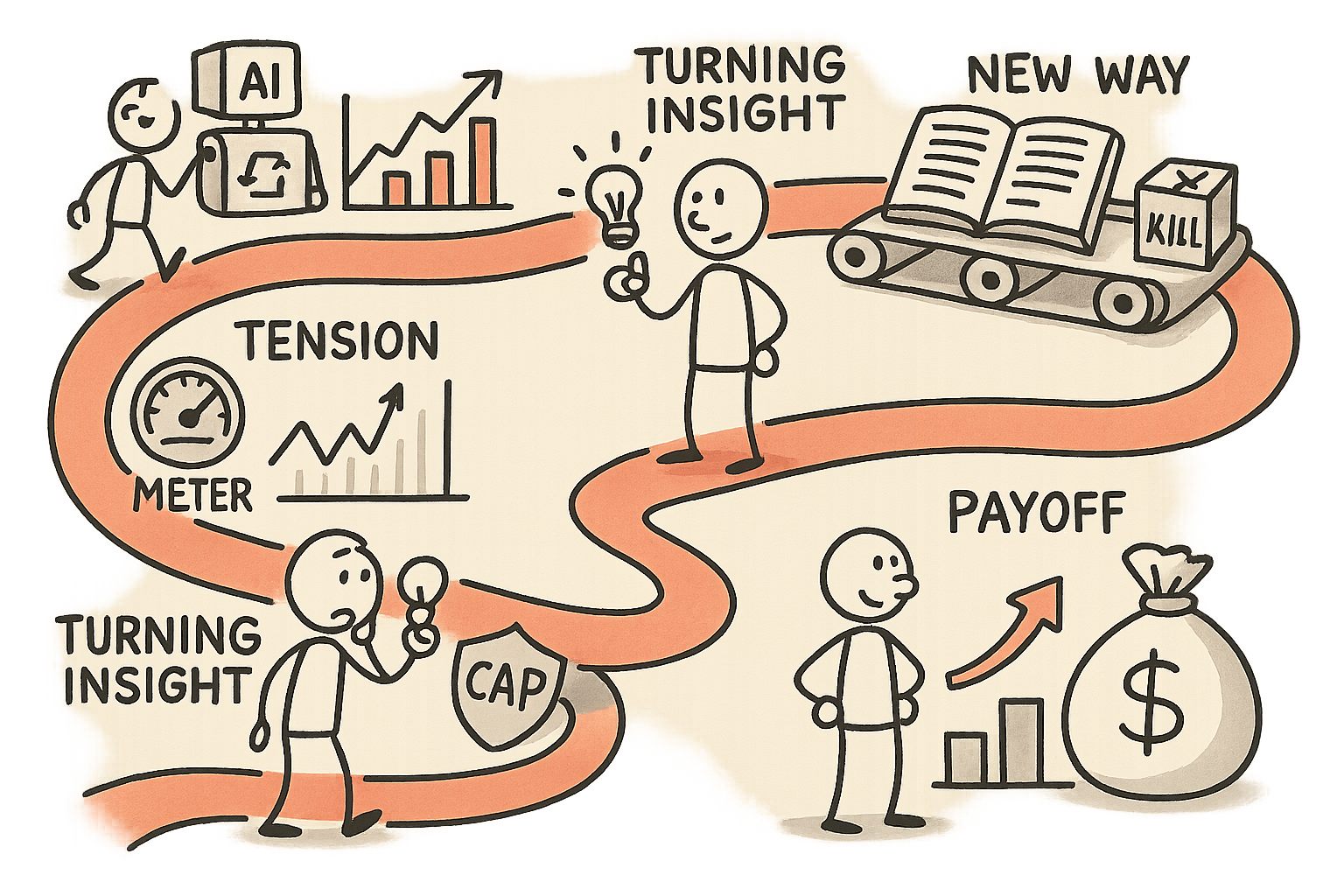
The most dangerous AI cost is the one that looks small at purchase time and turns non-linear in production.
You add “a few agent seats” or “some credits.” Teams get excited. Automations spread. A quarter later the bill arrives and nobody can explain which workflows created it, which customers benefited, or whether any of it replaced real cost. It just happened.
That is agentic COGS shock: not because AI is inherently expensive, but because we are importing a new meter into old procurement habits. Vendors have noticed. Many “pre-AI” SaaS products are now raising prices for agent access, and doing it with different meters, from credits to per-resolution pricing to custom agent metering, as described in SaaStr’s note on agent access price increases.
If you treat that as a purchasing problem, you will lose. The fix is a joint redesign of contracts, workflows, and instrumentation. You need the ability to say, with a straight face, “we can double usage without doubling cost,” or “if cost doubles, gross margin does not move.”
What makes agentic spend different (and why budgets get blindsided)
Traditional SaaS has familiar failure modes: shelfware, too many seats, overlapping tools. You can usually solve it with license cleanup and better approvals.
Agentic SaaS breaks those controls because the consumption unit is no longer a person. It is activity. And activity can explode quietly.
- One human can trigger thousands of calls. A single workflow change can fan out into background tasks, retries, and long context windows.
- Costs get created far from the buyer. The person signing the renewal is not the one prompting the agent inside a ticketing macro at 2 a.m.
- Value is hard to attribute. “Better support” is not a metric. “Fewer escalations per 1,000 tickets” is.
- Vendors have every incentive to meter where you cannot audit. Credits, “resolutions,” “agent actions,” “enrichments,” “copilot runs.” If you cannot reconcile it to your own logs, you are buying a black box.
The practical implication: you cannot manage agentic spend with annual budgeting and a renewal calendar. You manage it like a variable cost line: metered, forecasted, capped, and reviewed.
The contract moves: how to renegotiate before the renewal becomes a hostage situation
Procurement teams often negotiate price per unit. With agent pricing, the unit itself is the battlefield. Start there.
1) Force a clean bill of materials for “agent usage”
Ask for a written mapping of every chargeable event. Not marketing language. A list.
- What counts as a “resolution” or “agent action”?
- What triggers an event: UI click, API call, webhook, background job?
- Are retries billed?
- Do failed runs bill?
- Does context length change price?
If they cannot explain it unambiguously, you cannot govern it. That is not a “technical detail.” It is the product you are buying.
2) Negotiate caps and shock absorbers, not just discounts
Discounts feel good and solve nothing. You want structural protections.
- Monthly hard caps with graceful degradation. At cap, the agent downgrades to a cheaper mode, queues, or requires human confirmation.
- Budget-based throttles you can configure. Not a support ticket.
- Tiered pricing where marginal cost declines after a threshold. If your usage scales with success, your unit economics should improve, not deteriorate.
- Non-billing of failures (timeouts, model errors, vendor outages).
If the vendor refuses caps, that is a signal. Either they cannot control their own COGS, or they are betting you will not notice until it is too late.
3) Require auditability and exportable telemetry
“Trust our dashboard” is not governance. Make the following contractual:
- Usage export via API (daily granularity at minimum).
- Event-level logs with correlation IDs you can link to your own systems.
- Clear definitions that cannot be changed unilaterally mid-term.
I have watched an ERP cutover eat a year because reporting definitions were never stabilized. Agent metering is the same class of risk, just faster.
4) Get a “meter freeze” window for migrations
If a vendor is changing pricing models (credits to per-resolution, or adding metering on custom agents), you need time to rewire workflows. Ask for a transition period where you can run dual-mode measurement without paying twice. The point is not generosity. It is preventing production chaos.
The workflow redesign: stop letting agents run “free-range” inside your business
Most cost blow-ups are not caused by one huge use case. They come from dozens of small automations nobody “owns.” Fixing this is design, not policing.
1) Classify agent work into three lanes
- Lane A: Deterministic assistance. Summaries, drafting, formatting, retrieval. These should be cheap and bounded.
- Lane B: Decision support. Recommendations, triage, prioritization. These need traceability and sampling-based review.
- Lane C: Autonomous action. Sending emails, changing records, issuing refunds, pushing code. These need explicit gates.
Most teams accidentally jump from Lane A to Lane C because it “works in the demo.” Do not let a pricing surprise be the first time you discover that a bot can create 500 CRM updates overnight.
2) Replace “always-on” with triggers and checkpoints
- Trigger on meaningful state changes, not every keystroke.
- Add a “confirm” step before expensive runs (long context, tool use, multi-step plans).
- Cache and reuse outputs (summaries, enrichment) with TTLs.
- Batch non-urgent work into scheduled windows.
This is where gross margin is protected. Not in a negotiation call.
3) Build the kill switch before you need it
You need a simple mechanism to stop agent activity by workspace, by workflow, or by customer segment. Not because you expect disaster daily, but because you want permission to scale. If you cannot halt spend in minutes, you will hesitate to roll out the next use case.
If this is already a live problem in your organization, see AI sprawl as an ownership problem. The pattern is the same: nobody is accountable for the full bill and the full risk surface.
The metering system: treat agents like a variable-cost product line
Here is the shift: you do not “buy AI.” You operate AI consumption.
1) Create a usage ledger you own
Do not rely on vendor totals. Build an internal ledger that records, at minimum:
- Workflow name
- System initiating the call (CRM, support, IDE, internal tool)
- Customer or segment tag (where relevant)
- Estimated cost units (credits, calls, “resolutions” mapped into your internal unit)
- Outcome tag (saved time, prevented escalation, conversion assist, unresolved)
When finance asks “what drove this month,” you answer in three lines, not three weeks.
2) Define two limits: technical and financial
- Technical limit: rate limits, concurrency limits, tool-use limits.
- Financial limit: monthly budget per workflow owner, with alerts at 50 percent, 80 percent, 95 percent.
Make the budget visible to the people who can change the workflow. If only finance sees it, nothing changes.
3) Price internal usage, even if nobody pays cash
Chargeback is optional. Unit economics thinking is not.
- Assign an internal “cost per run” for each agent workflow.
- Require a simple justification for any workflow that does not have a measurable outcome.
This is the same discipline you would apply to cloud spend, except the demand can be created by one prompt template tweak.
The quarterly rhythm: a simple governance loop that keeps margins intact
Do not build a committee. Build a cadence.
- Inventory (week 1): list agent-enabled workflows by system and owner. Remove dead ones.
- Meter mapping (week 2): reconcile vendor charges to internal ledger categories. Identify “unknown” usage and kill it until explained.
- Top 5 cost drivers (week 3): redesign the worst offenders. Add gating, caching, batching, or downgrade models.
- Contract posture (week 4): decide which vendors get renegotiation, which get replacement exploration, and which get tighter throttles.
If you want a broader rollout pattern that makes AI compound rather than sprawl, build on the stack you have. The point is to concentrate usage in workflows you can observe and improve.
My opinion: caps are not pessimism, they are the permission slip to scale
Agent pricing is not a temporary craze. It is vendors aligning their revenue with their own variable costs, and with the value they believe you get. The risk is that you adopt it with procurement habits built for seat licenses.
The companies that win will treat agentic spend like any other cost of goods: engineered, metered, and bounded. Renegotiate the unit. Redesign the workflow. Own the ledger. Put in a kill switch. Then scale with confidence.
Otherwise, you will wake up in a year with great demos, higher bills, and a gross margin story you cannot defend.
Newsletter
Working notes, straight to your inbox.
Occasional, no-noise notes on leadership, execution, and applied AI — from the field, not the sidelines.